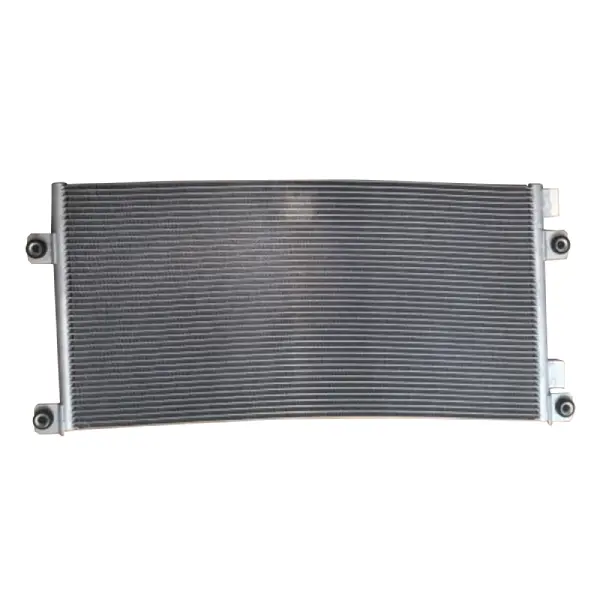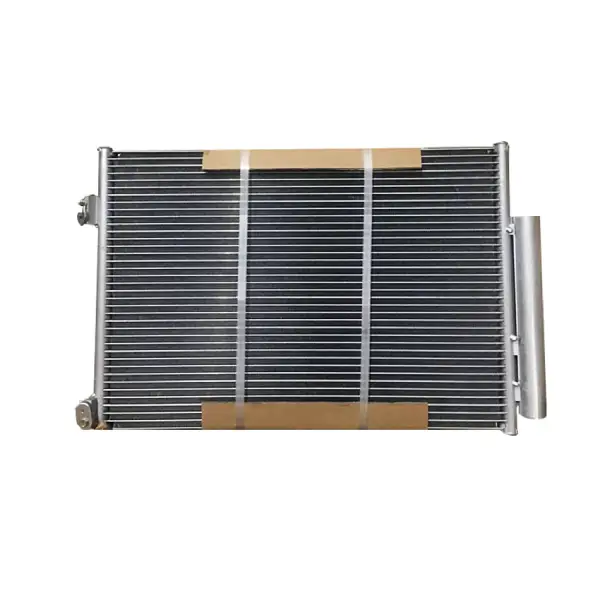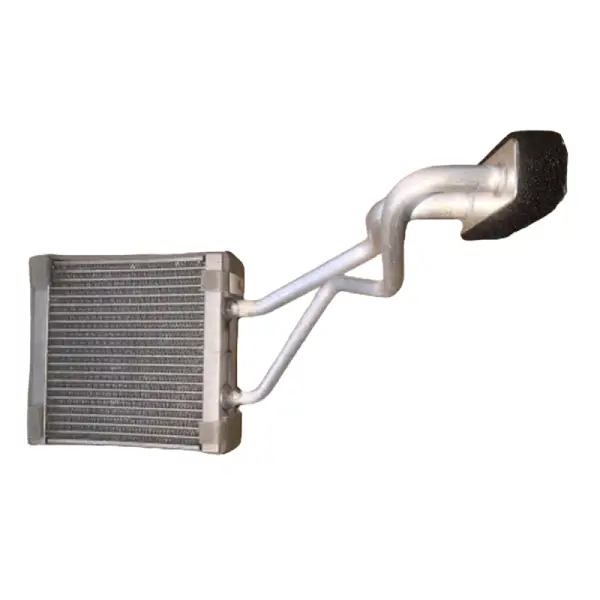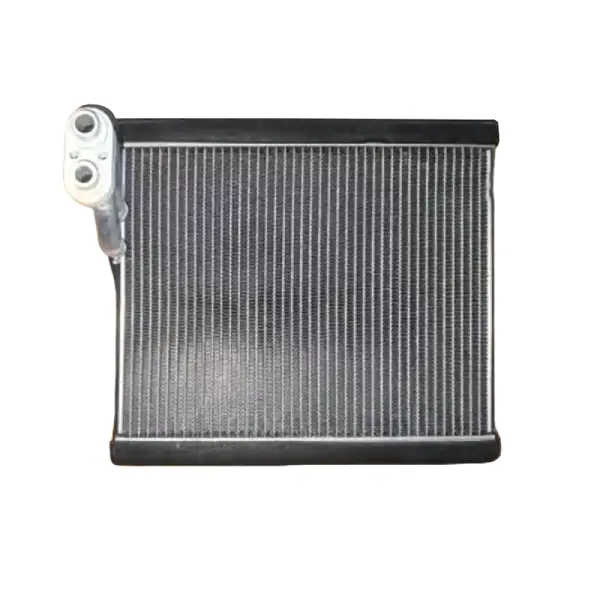

AC dryers are essential components in automotive air conditioning systems. Their primary functions include separating gas and liquid, removing moisture, and filtering contaminants from the refrigerant. In this article, Anchor Group shares professional insights on identifying common dryer failures and offers expert repair advice.
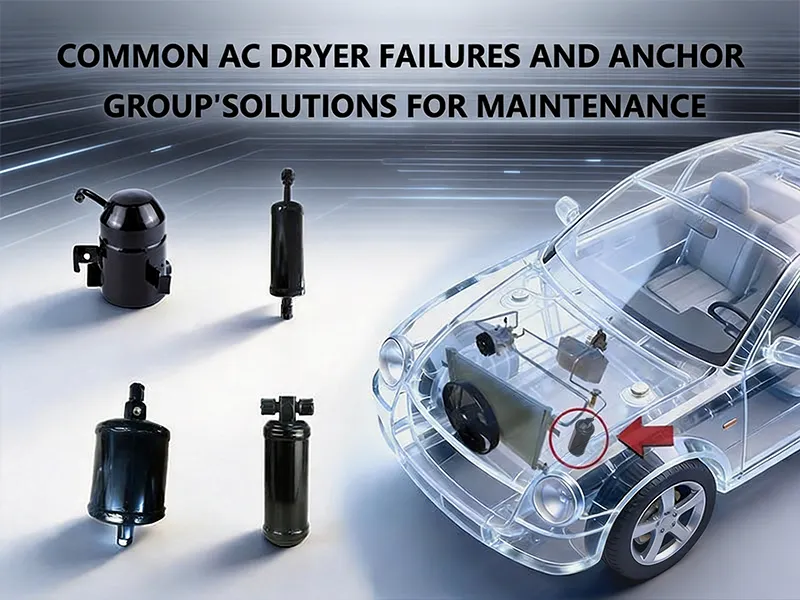
Common Failures of AC Dryers
Ice Blockage Caused by Saturated Desiccant
One of the most typical issues that arise with AC dryers is the occurrence of ice blockage, which happens when the desiccant becomes saturated with moisture. When the desiccant absorbs too much moisture, the excess moisture freezes at the expansion valve, causing a blockage. This often leads to intermittent cooling, particularly noticeable after starting the vehicle following a period of parking. In severe cases, the AC may fail to cool altogether, disrupting the vehicle’s comfort.
System Blockage Resulted in Desiccant Crumbling or Shedding
Another common failure occurs when the desiccant deteriorates and breaks down into powder. Over time, as the desiccant crumbles or sheds, the resulting powder clogs critical components like the expansion valve, pipes, and condenser. This can lead to a complete system blockage and result in extremely high pressure on the high side of the system and very low pressure on the low side. Consequently, cooling performance drops significantly or stops entirely. The issue can range from minor valve clogging to more severe consequences, such as compressor valve plate damage or shaft seizure.
Insufficient Flow when Internal Filter is Clogged
In some cases, the internal filter of the dryer becomes clogged with contaminants like rust, dirt, and oil sludge. This blockage restricts the flow of refrigerant, causing low pressure, weak cooling, and an unusually large temperature difference between the inlet and outlet of the dryer. The disrupted refrigerant circulation can trigger compressor overheating protection, resulting in reduced cooling performance.
Slow Refrigerant Leak in Shell/Joint
Another failure point is the slow refrigerant leak that occurs at the shell or joints. Over time, refrigerant may gradually leak from the system, reducing cooling efficiency and, eventually, causing the AC to stop cooling altogether. Common leak points include the weld seams on aluminum joints, seals around the sight glass, and threaded O-ring positions. These leaks are often accompanied by oil stains around the leak area, indicating that air conditioning oil is leaking along with the refrigerant.
Sight Glass Failure, Cloudy, or Blurry
The sight glass, which is an essential part of monitoring the system, may fail by becoming cloudy or blurry, often due to desiccant degradation or moisture contamination. If the sight glass turns cloudy, it’s an indication that the desiccant has either powdered or absorbed moisture. If the sight glass cracks or detaches, it allows air and moisture to enter the system, which leads to further contamination and requires immediate replacement.
Abnormal Internal Pressure (Failure of Gas-Liquid Separation)
A malfunction in the gas-liquid separation function of the dryer can also lead to abnormal internal pressures. When this occurs, liquid refrigerant enters the compressor, causing issues such as liquid hammer or unusual noises in the system. This can result in compressor valve plate damage, knocking, or even a complete compressor failure, which requires costly repairs.
Mismatch Between Dryer and System (Incorrect Model)
Lastly, mismatches between the dryer and the system, such as installing an incorrect model, can lead to significant issues. If the dryer’s volume is too small, it may fail to absorb enough moisture, causing ice blockages. An incorrect interface or reversed flow direction can cause poor sealing, leakage, or even system blockage, all of which prevent the AC system from functioning correctly.
When to Prioritize Suspecting the AC Dryer
- Air conditioning cooling intermittently (classic ice blockage).
- Low pressure is very low, high pressure is very high, with severe frosting at the expansion valve.
- Continuous air bubbles in the sight glass, even after refrigerant recharge.
- Oil traces on pipes or joints, indicating slow refrigerant leakage.
- Ice blockage shortly after AC repair.
- Compressor failure shortly after replacement.
Key Repair Principles (Very Important)
- Whenever the system is opened to air, the AC dryer must be replaced.
- If the compressor is damaged (carbonized or seized), the AC dryer must be replaced.
- Old dryers should never be reused.
- New dryers should be installed only after opening the packaging to avoid moisture absorption.
- The inlet and outlet directions of the dryer must not be reversed during installation.