
Bus air conditioning systems are essential for maintaining a comfortable cabin environment for passengers and drivers. For distributors, importers, wholesalers, and fleet operators, choosing the right bus AC system requires more than comparing cooling capacity and price. Drive method, installation position, and system structure are also important factors to consider.
As a manufacturer and supplier of automotive air conditioning systems and parts in China, Anchor Group provides integrated climate control solutions for different vehicle applications. In this guide, we explain three key points that B2B buyers should check before purchasing bus air conditioning systems in bulk.
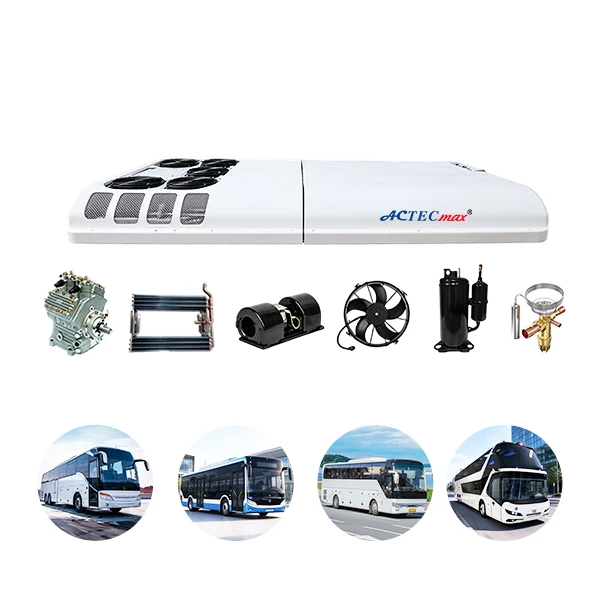
Drive Methods: Engine-Driven vs. Electric
Bus air conditioning systems can be classified according to their compressor drive methods. The two common types are engine-driven systems and electrically driven systems.
Engine-Driven Bus AC
Engine-driven bus air conditioning systems typically use a belt connected to the vehicle’s engine to drive the compressor. They are commonly used in conventional fuel-powered buses.
Before purchasing, buyers should check compressor compatibility, engine power requirements, belt configuration, and the vehicle’s existing AC system.
Electric Bus AC
Electric bus air conditioning systems use an electrically driven compressor and are designed for applications such as battery-electric buses. Depending on the system design, they may operate using the vehicle’s high-voltage power supply.
These systems must be compatible with the vehicle’s electrical architecture, voltage range, cooling requirements, and control system.
For wholesale buyers, the key is to select a drive method that matches the vehicle type and power supply rather than assuming that one solution fits all buses.
Installation Position: Roof-Mounted, Rear-Mounted, and Skirt-Mounted
The installation position affects vehicle compatibility, available space, airflow, and maintenance access. Common bus AC installation configurations include the following.
Roof-Mounted Bus AC
Roof-mounted systems are installed on the roof of the bus. This arrangement is widely used in buses and coaches because it makes use of roof space and can leave more room inside the vehicle.
Buyers should check the available roof area, mounting dimensions, vehicle height restrictions, structural load capacity, and airflow clearance.
Rear-Mounted Bus AC
Rear-mounted systems are installed at the rear of the vehicle. Depending on the bus design, this arrangement can help preserve roof space.
Before ordering, confirm the available installation space, airflow requirements, and accessibility for servicing.
Skirt-Mounted Bus AC
Skirt-mounted systems are installed in a designated compartment along the lower side of the bus. This layout may be suitable for specific vehicle designs, but it requires sufficient space and appropriate ventilation.
Buyers should verify compartment dimensions, ground clearance, airflow paths, and maintenance access.
Regardless of the installation position, the selected system must match the vehicle’s body structure and installation requirements.
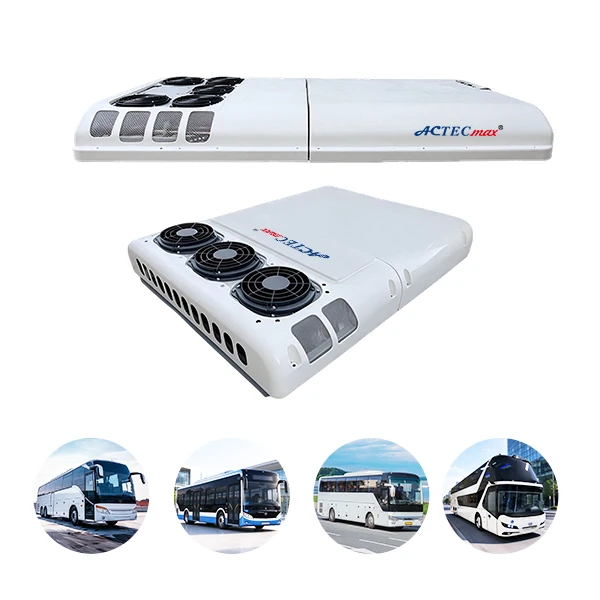
System Structure: Integrated vs. Split Systems
In addition to drive method and installation position, bus air conditioning systems can also differ in their structural configuration. Two common terms are integrated systems and split systems.
Integrated Bus AC Systems
An integrated system combines major air conditioning components into a more compact assembly. Depending on the design, components such as the evaporator, condenser, and associated equipment may be housed within one unit.
This configuration can simplify overall system arrangement and installation planning. Buyers should check the unit’s overall dimensions, mounting requirements, cooling capacity, and maintenance access.
Split Bus AC Systems
A split system places major components, such as the evaporator and condenser, in separate locations. The components are connected through refrigerant piping and other necessary connections.
This arrangement offers greater flexibility in component placement, depending on the bus layout. However, buyers need to consider piping routes, connection requirements, installation space, and service accessibility.
It is important to note that integrated or split construction does not necessarily determine whether a system is roof-mounted, rear-mounted, or skirt-mounted. These are separate selection criteria, and their compatibility depends on the specific product design.
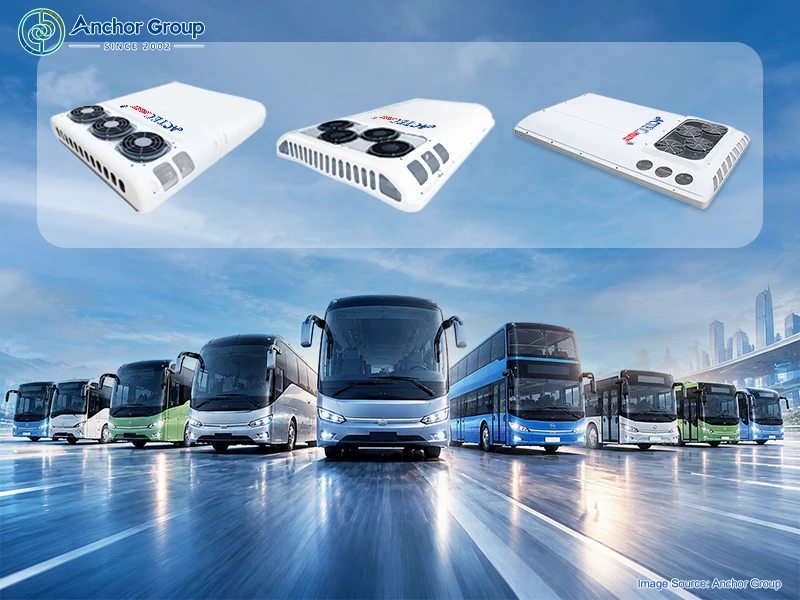
What Should Wholesale Buyers Confirm Before Ordering?
Before placing a bulk order for bus AC systems, B2B buyers should confirm the following information with the supplier:
- Vehicle application: Fuel-powered bus, battery-electric bus, or another vehicle type.
- Drive method: Engine-driven or electrically driven compressor.
- Installation position: Roof-mounted, rear-mounted, or skirt-mounted.
- System structure: Integrated or split configuration.
- Cooling capacity: Whether the system meets the vehicle’s cooling load and operating conditions.
- Installation compatibility: Available space, mounting dimensions, electrical connections, and refrigerant piping requirements.
- Maintenance requirements: Access to serviceable components and availability of replacement parts.
Providing vehicle specifications, installation drawings, or photographs can help the supplier recommend a suitable configuration and reduce compatibility issues during installation.
Choose the Right Bus AC System for Your Market
Selecting the right bus air conditioning system involves evaluating the drive method, installation position, and structural configuration together. These specifications help distributors, importers, wholesalers, and fleet service providers identify suitable products for their target vehicle applications.
Anchor Group supplies automotive air conditioning products and integrated climate control solutions for different vehicle applications. Contact our team to discuss your vehicle requirements, product specifications, and wholesale purchasing needs.