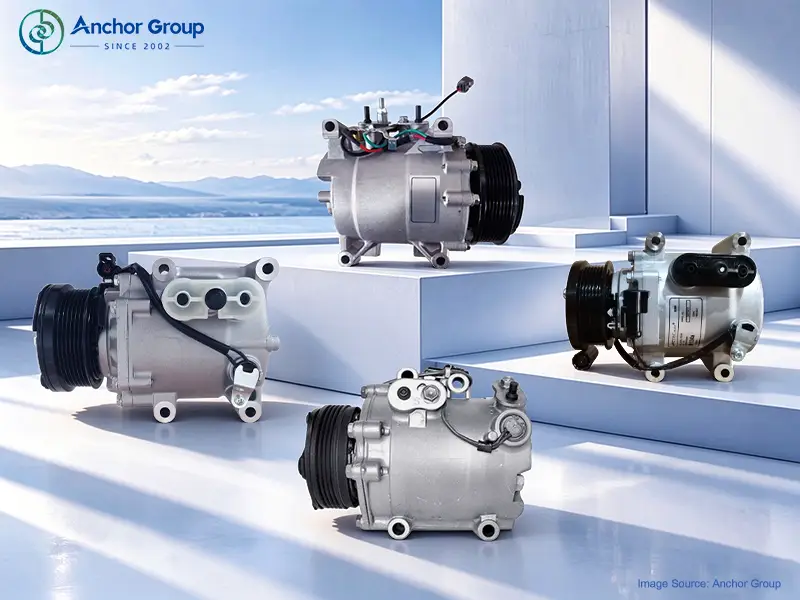

Rotary vane compressors are a type of positive-displacement compressor used in auto A/C systems. They use a rotating mechanism with sliding vanes to draw in, compress, and discharge refrigerant vapor.
Featuring a compact structure and continuous rotary operation, rotary vane compressors are designed to meet the requirements of specific automotive A/C applications.
In this guide, we explore the structure, working principle and key characteristics of rotary vane compressors. We also explain important factors to consider when selecting and sourcing these compressors, helping distributors, importers, and automotive A/C professionals make wise purchasing decisions.
What Is a Rotary Vane Compressor?
A rotary vane compressor is primarily composed of a cylinder, rotor, sliding vanes, drive shaft, front and rear end plates, and discharge ports.
The rotor is mounted on the drive shaft and positioned eccentrically inside the cylinder. Multiple radial slots in the rotor accommodate sliding vanes, which move in and out to maintain contact with the cylinder wall. These vanes divide the internal space into several independent compression chambers.
As the drive shaft rotates the rotor, the volume of each chamber continuously changes. When a chamber expands, low-pressure refrigerant vapor enters through the suction port. As rotation continues, the chamber volume decreases, compressing the trapped refrigerant. Once the required discharge conditions are reached, the compressed refrigerant exits through the discharge port.
Rotary vane compressors generally do not require a conventional suction valve. Instead, the intake process is controlled by the position of the suction port and the changing chamber volume. Depending on the design, discharge valves or check valves may still be used.
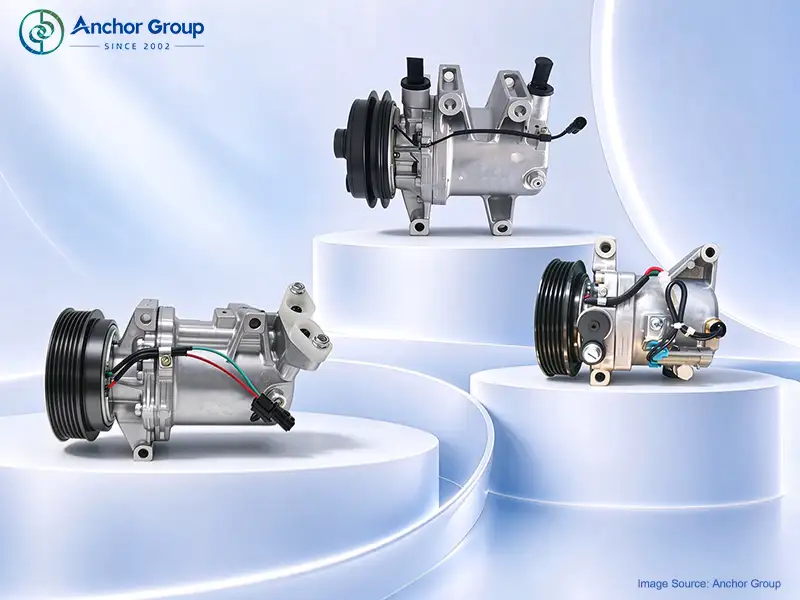
Working Principle of a Rotary Vane Compressor
The compression process can be divided into four main stages:
- Suction
As the rotor rotates, the space between adjacent vanes expands. This creates a pressure difference that draws low-pressure refrigerant vapor into the compression chamber through the suction port.
- Chamber Sealing
As the rotor continues rotating, the chamber becomes separated from the suction port. Refrigerant vapor is trapped between adjacent vanes, the rotor surface, and the cylinder wall.
- Compression
The volume of the sealed chamber gradually decreases due to the eccentric arrangement of the rotor and cylinder. The trapped refrigerant is compressed, increasing its pressure and temperature.
- Discharge
When the compressed refrigerant reaches the discharge port, it flows out of the chamber and enters the high-pressure side of the A/C system. The cycle then repeats as the rotor continues rotating.
Key Characteristics of Rotary Vane Compressors
- Compact structure with a relatively small installation footprint.
- Sliding vanes create multiple compression chambers.
- Continuous rotary motion without a reciprocating piston mechanism.
- Multiple compression events during each shaft revolution.
- Discharge pulsation is influenced by vane quantity, chamber geometry, and port design.
What to Consider when Sourcing Rotary AC Compressors?
For automotive A/C distributors, importers, and wholesalers, sourcing rotary vane compressors involves more than comparing prices. Product compatibility, technical specifications, manufacturing quality, and supplier capabilities all play an important role in purchasing decisions.
Here are six key factors to consider:
Vehicle Compatibility
Verify the vehicle make, model, engine displacement, and production year. Check the original equipment (OE) number and compressor model to ensure compatibility with the intended vehicle application.
Technical Specifications
Review essential specifications, including compressor displacement, operating speed, pulley configuration, voltage, refrigerant type, and oil requirements. These details help determine whether the compressor matches the target A/C system.
Product Quality and Reliability
Evaluate the compressor’s structural design, material quality, sealing performance, and manufacturing consistency. Ask suppliers about their quality control procedures, leakage inspections, and performance testing.
Product Range and Model Availability
For distributors and wholesalers, a supplier with a broad range of compressor models can simplify procurement and help meet different vehicle application requirements. Check model coverage and availability before establishing a long-term supply relationship.
OEM & ODM Customization
If you sell products under your own brand, consider whether the supplier supports private labeling, customized packaging, product identification, and other branding requirements.
Supplier Support and Warranty
Evaluate the supplier’s technical support, product documentation, warranty terms, and after-sales service. Responsive support can help reduce product selection errors and simplify communication when handling quality or compatibility issues.
Conclusion
Understanding the structure, working principle, and key features of rotary vane compressors helps buyers make informed sourcing decisions. Vehicle compatibility, product quality, technical specifications, and supplier reliability are key factors to consider. As an automotive A/C solutions supplier,we offers a wide range of compressors and A/C components, backed by one-stop and integrated sourcing resources and OEM & ODM customization services. Contact Anchor Group to explore suitable products for your business.