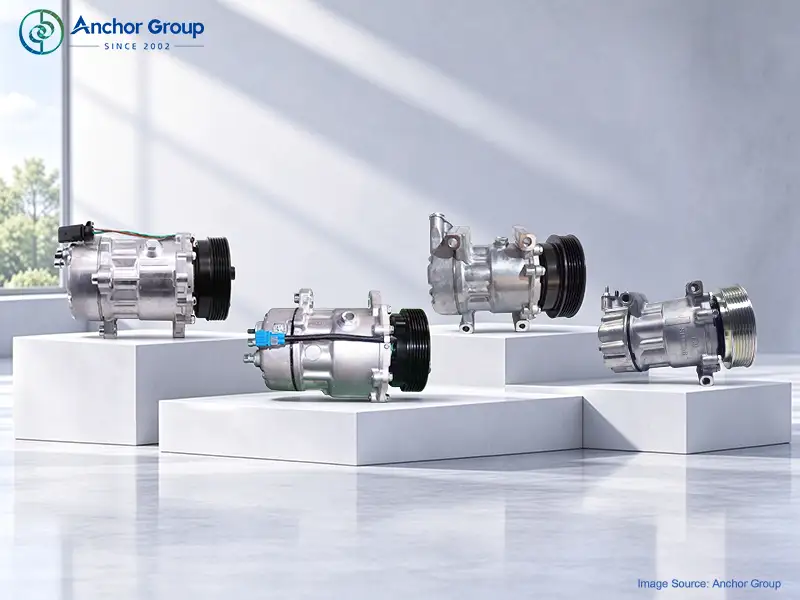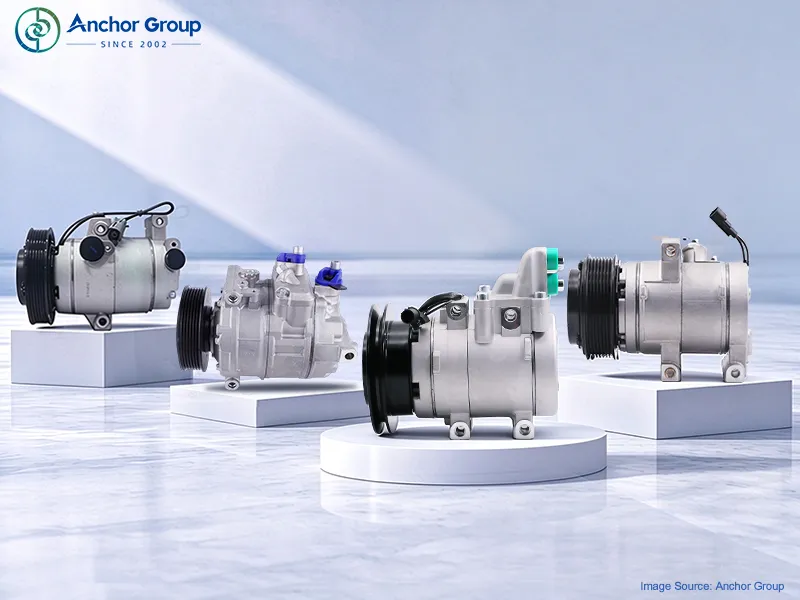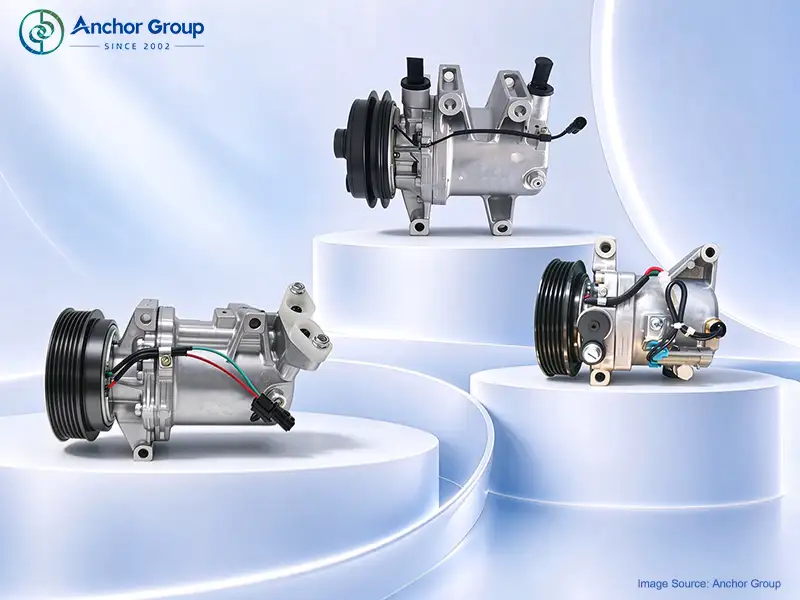

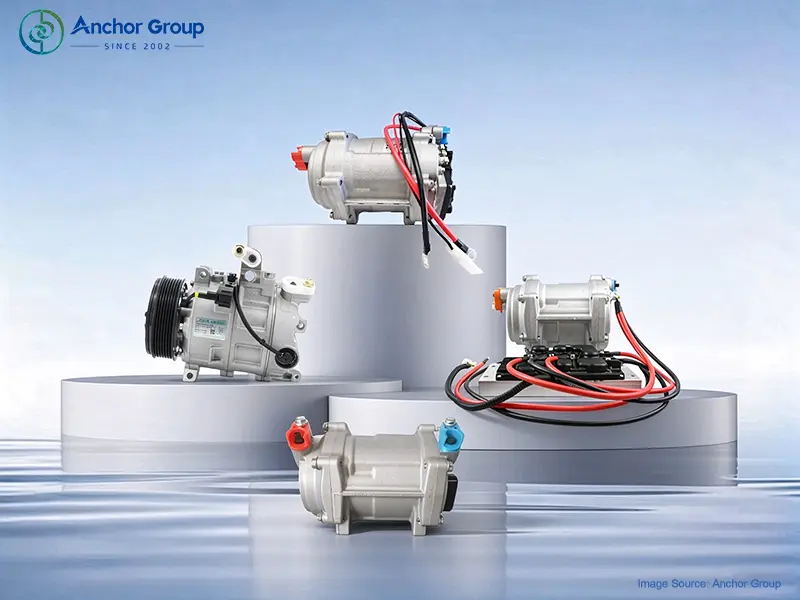
Many applications need compressors that run independently of an engine as the rapid growth of the electric vehicle market . Electric scroll compressors are drawing attention for their compact design, smooth operation, low noise and efficiency potential.
For distributors, importers, wholesalers and system integrators, price is only one part of the buying decision. Compatibility, performance, quality, supplier capability and total cost matter too.
Market Outlook: 2026–2027
The global automotive scroll e-compressor market is showing steady growth. It is expected to rise from USD 1.57 billion in 2025 to USD 1.68 billion in 2026, an increase of about 7.1%. Based on the report’s forecast growth rate of 7.6%, the market could reach about USD 1.81 billion in 2027. It is projected to reach USD 2.26 billion by 2030, pointing to continued growth in this product segment.
Key factors include:
- Vehicle electrification: Electric vehicles, and many hybrids, need compressors that can run without the engine.
- Energy efficiency: Lower power consumption helps protect driving range, making efficiency and speed control important.
- Integrated thermal management: One system may handle cabin cooling, battery cooling and heat pump functions under changing loads.
- Commercial vehicles: Electric buses, refrigerated vehicles and other platforms create further demand for independent cooling.
How an Electric Scroll Compressor Works
An electric motor drives two scrolls: one fixed and one orbiting. As the orbiting scroll moves, the pockets between them shrink, raising refrigerant pressure before discharge.
| Component | Main function |
| Fixed scroll | Forms compression chambers with the orbiting scroll |
| Orbiting scroll | Compresses refrigerant through orbital motion |
| Electric motor | Provides driving power |
| Inverter / controller | Controls motor speed and operation |
| Main shaft | Transmits power from the motor |
| Anti-rotation mechanism | Stops the orbiting scroll from spinning on its own axis |
| Housing | Supports and protects internal parts |
| Suction port | Draws in low-pressure refrigerant |
| Discharge port | Releases high-pressure refrigerant |
Key Advantages
- Efficiency potential: Continuous compression and relatively few moving parts can help reduce losses.
- Compact design: An integrated motor and compression unit can save installation space.
- Smooth, quiet operation: Orbital motion and multiple compression pockets help reduce vibration, noise and pressure pulsation.
- Variable speed: The controller adjusts output to match cooling demand.
- Independent operation: With a suitable power supply, the compressor can run while the engine is off.
Actual efficiency, capacity, noise and service life depend on design, refrigerant, speed, system matching and manufacturing quality.
Main Applications
- Electric and hybrid passenger vehicles: Provide cabin cooling, with output adjusted to passenger demand and ambient conditions.
- Electric buses: Serve large cabins and long operating hours when capacity and system design are properly matched.
- Commercial vehicles and truck parking A/C: Support engine-off cooling. Voltage, power supply, capacity and installation must suit the vehicle.
- Battery thermal management and heat pumps: Work within integrated systems. The compressor must suit the refrigerant, pressure range and heating and cooling requirements.
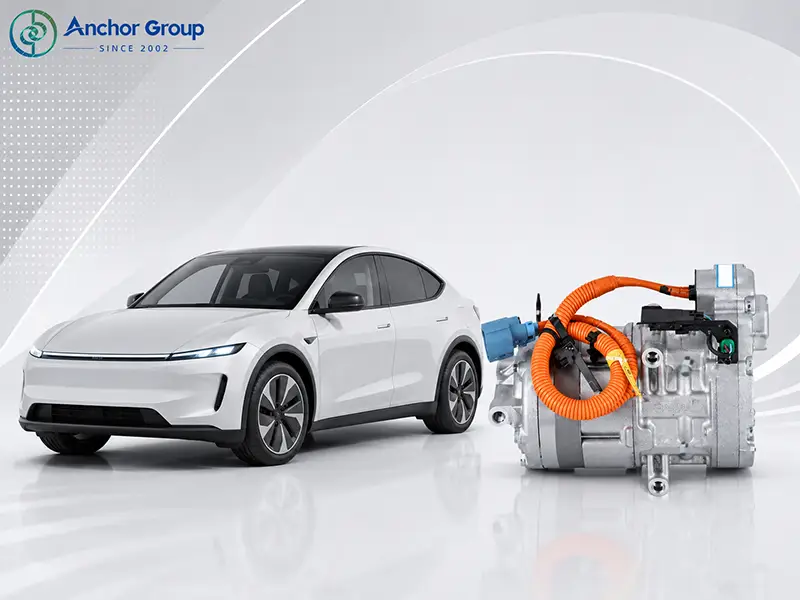
Electric Scroll vs. Wobble-Plate Compressors
“Electric” describes the drive method; “scroll” and “wobble-plate” describe the compression mechanism. Engine-driven compressors usually use a belt and pulley, so their speed is linked to engine speed.
| Item | Electric scroll | Wobble-plate |
| Mechanism | Fixed and orbiting scrolls | Pistons driven by a wobble plate |
| Compression | Continuous orbital motion | Reciprocating piston motion |
| Main moving parts | Orbiting scroll and drive mechanism | Pistons, connecting rods and wobble plate |
| Noise and vibration | Generally low | Depends on design and operating conditions |
| Drive | Electric motor | Engine or electric motor |
| Typical uses | EVs, hybrids and electric thermal systems | Conventional and some electric A/C systems |
Neither type is best for every job. The choice depends on the vehicle, cooling needs, operating conditions, cost targets and system design.
Also Read: Automotive A/C Wobble Plate Compressor: A Technical & Buying Guide
B2B Purchasing Guide
Before requesting a quote, confirm the vehicle type, power supply, required cooling capacity, installation space and operating environment. A passenger EV compressor may not suit a bus or truck parking A/C system.
Compare technical specifications
Displacement and voltage alone are not enough. Include these items in your RFQ:
| Parameter | What to confirm |
| Compressor type | Electric scroll |
| Rated voltage | Matches the vehicle’s electrical system |
| Displacement | Suits the required capacity |
| Cooling capacity | Verified under stated test conditions |
| Operating speed | Minimum, rated and maximum |
| Refrigerant | Compatible with the A/C system |
| Lubricating oil | Correct type and quantity |
| Power consumption | Input under stated conditions |
| COP | Cooling capacity divided by power input |
| Controller | Integrated or separate |
| Dimensions | Fits the installation space |
| Weight | Suitable for the installation |
| Electrical connections | Match vehicle wiring and controls |
Capacity changes with speed and with ambient, evaporating and condensing temperatures. Compare figures only under comparable conditions.
Check system compatibility
Confirm high- or low-voltage operation, power supply, control signals, communication protocol and protection functions. Check whether the controller is included, and evaluate it with the compressor as one system. A mismatch can add integration cost and installation problems. Refrigerant and oil must also match the system specification.
Assess the supplier
Ask about incoming material inspection, assembly control, performance testing, leak testing and final inspection. Check OEM/ODM, customization, private labeling, packaging and documentation support. For long-term business, consistent quality and delivery often matter more than the lowest first quote.
Compare total cost
Compare quotes on the same configuration. A lower price may exclude parts needed for installation.
- Product and accessories: compressor, controller, cables, connectors and mounts
- Other costs: packaging, freight, import duties, inspection and potential warranty costs
- Terms and service: minimum order quantity, lead time, payment, warranty, defect handling and export documents
Test samples first
Before a large order, test cooling capacity, power consumption, stability, noise, vibration, leakage and controller compatibility. System developers should test under representative operating conditions. Once samples pass, start with a trial order and increase volume as demand grows.
Conclusion
Electric scroll compressors play a growing role in vehicle cooling and thermal management. For B2B buyers, a practical approach is to start with a clear application and a manageable product range, then expand based on test results and market feedback.
Look beyond unit price. Application fit, verified performance, electrical compatibility, manufacturing quality and reliable supply all matter. Suppliers can build stronger partnerships through accurate documentation, consistent quality and responsive technical support.