
In most real-world cases, an overcharged AC system is the result of improper servicing procedures. Some DIY users or inexperienced technicians may mistakenly assume that adding extra refrigerant will improve cooling performance. However, this is a common misconception. In reality, excessive refrigerant increases system pressure, reduces condenser heat transfer efficiency, causes unstable cabin cooling, and raises compressor load, potentially leading to overheating. For this reason, all automotive AC systems must be charged strictly according to the manufacturer’s specified refrigerant weight, rather than relying on pressure-based “estimation” methods. As a global provider of AC systems and components, Anchor Group works closely with repair workshops, distributors, and aftermarket service providers worldwide. Based on communication and feedback from our partners, we have observed that most overcharging issues are not caused by equipment limitations, but by incorrect service practices and lack of standardized tools. To properly diagnose and fix an overcharged AC in Car, professional technicians should always rely on professional tools and complies with environmental regulations while operating. Our goal is to share practical HVAC knowledge and professional AC system solutions to help partners improve service efficiency, reduce operational errors, and enhance overall maintenance value.
Signs of Excess Refrigerant in a Car AC System
After charging the AC system, the easiest way to determine whether it has been overcharged is by checking the system pressure with a manifold gauge set. If both the high-side and low-side pressures exceed the manufacturer’s specified operating range, the system is likely overcharged. When too much refrigerant is added, the excessive pressure can activate the high-pressure protection switch, causing the compressor to cycle on and off frequently.
Other common symptoms include:
- Overheating of the compressor discharge line
- Poor or inconsistent cabin cooling performance
- Excessive high-side pressure
- Increased compressor load
- Frequent compressor cycling
- Reduced overall cooling efficiency
Tools Required to Recover Excess Refrigerant
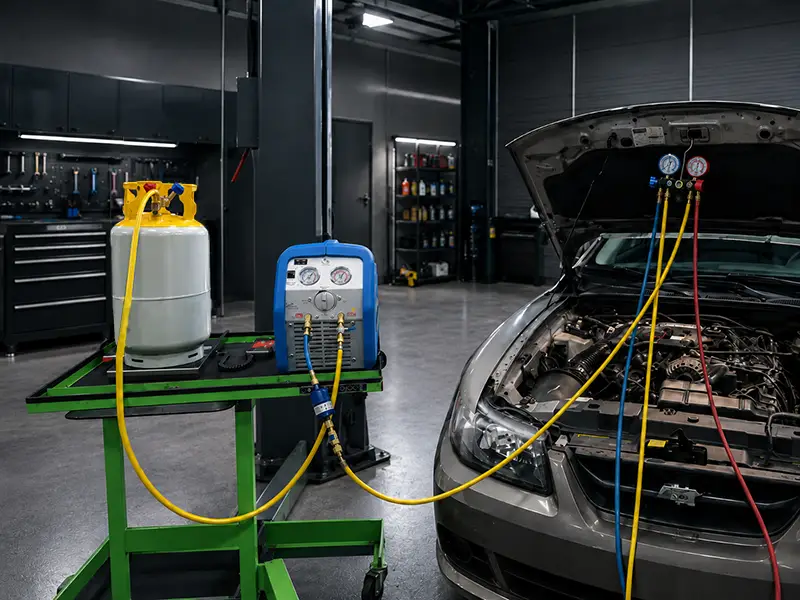
Before recovering refrigerant from the AC system, prepare the following equipment.
1. Refrigerant Recovery Cylinder
A refrigerant recovery cylinder is designed to safely store and transport recovered refrigerant during automotive and commercial HVAC servicing. If you are using a new recovery cylinder, evacuate it before use to remove moisture, residual nitrogen, and other contaminants. Before starting the recovery process, weigh the empty cylinder and record its Tare Weight (TW). This allows you to calculate the amount of recovered refrigerant accurately and prevents overfilling the cylinder.
2. Refrigerant Recovery Machine
A refrigerant recovery machine safely removes refrigerant from the vehicle’s AC system and transfers it into the recovery cylinder. Unlike venting refrigerant into the atmosphere, a recovery machine complies with environmental regulations and prepares the system for repair, evacuation, or recharging. Most recovery machines include an internal filtration system that removes oil, moisture, and contaminants, helping keep the recovered refrigerant clean for recycling or proper disposal.
3. Manifold Gauge Set
A manifold gauge set is an essential diagnostic tool for automotive air conditioning service. It is used to monitor both high-side and low-side system pressures during refrigerant recovery, leak diagnosis, vacuum evacuation, and refrigerant charging. Accurate pressure readings allow technicians to evaluate the operating condition of the AC system throughout the recovery process.
How to Recover Excess Refrigerant from a Car AC System
Step 1. Connect the Manifold Gauge Set
Connect the manifold gauge set to the vehicle’s AC system.
- Blue hose: Connect to the low-pressure service port. This port is typically located between the compressor and evaporator and is connected to the larger-diameter refrigerant line.
- Red hose: Connect to the high-pressure service port. It is usually located between the compressor and expansion valve near the condenser and uses the smaller refrigerant line.
- Yellow hose: Connect to the inlet port of the refrigerant recovery machine.
Step 2. Connect the Recovery Machine
Most refrigerant recovery machines have an inlet and an outlet.
- Connect the inlet to the yellow service hose from the manifold gauge.
- Connect the outlet to the refrigerant recovery cylinder.
Double-check that all hoses and fittings are securely connected before starting the recovery process.
Step 3. Recover the Excess Refrigerant
- Open the valve on the refrigerant recovery cylinder.
- Open the manifold gauge valve connected to the yellow service hose and start the refrigerant recovery machine.
- Operate the recovery machine in a controlled process while continuously monitoring manifold gauge readings until system pressure stabilizes.
- If the high-side pressure drops noticeably while the low-side pressure returns to its normal operating range and both pressures stabilize, the excess refrigerant has likely been removed.
- Stop the recovery machine manually and close all valves.
Important: Do not rely solely on reaching a specific pressure value. Pressure varies with ambient temperature. Instead, confirm that both high-side and low-side pressures have stabilized within the manufacturer’s specified operating range for the current ambient conditions before determining that the correct refrigerant charge has been restored.
FAQ
What Happens When AC is Overcharged in Car?
An overcharged AC system operates at excessively high pressure.
This may trigger the high-pressure safety switch, causing the compressor to cycle on and off repeatedly.
Other car ac overcharged symptoms include:
- Compressor discharge line overheating
- Poor or unstable cabin cooling
- Abnormally high operating pressure
- Increased compressor workload
- Reduced system efficiency
If left uncorrected, prolonged operation under excessive pressure may shorten compressor life and increase the risk of component failure.
Will an Overcharged AC Still Cool?
Yes—but not efficiently.
An overcharged air conditioning system may initially produce cold air, but cooling performance is often inconsistent.
Because excessive refrigerant raises system pressure, the condenser cannot reject heat efficiently. As a result, vent temperatures may fluctuate, cooling capacity may decrease over time, and the compressor may cycle frequently due to high-pressure protection.
Overall, the system consumes more energy while delivering less effective cooling.
What Does an Overcharged AC Compressor Sound Like?
A compressor operating in an overcharged AC system often sounds more strained than normal.
Common noises include:
- Loud or harsh compressor engagement
- Frequent clicking caused by high-pressure cycling
- Continuous humming or laboring sounds
- Increased engine load, especially at idle
- A noticeable “struggling” or bogging-down sound during compressor operation
If these symptoms occur together with unusually high system pressure, the refrigerant charge should be checked using professional diagnostic equipment.
Conclusion
Recovering excess refrigerant is a precision task that demands the right tools, proper procedures, and a clear understanding of system behavior. Skipping steps or relying on guesswork can result in repeat servicing, compressor damage, or unnecessary costs for both the workshop and the end customer.
At Anchor Group, we supply professional-grade AC system components and service solutions designed to support workshops and distributors in delivering accurate, compliant, and efficient service. Whether you are sourcing recovery equipment, compressors, or looking for technical guidance on AC system maintenance, our team is ready to assist.
Contact us to learn more about our product range or to discuss tailored solutions for your business needs.