

Maintaining the normal car AC vent temperature is crucial for both passenger comfort and system efficiency. This guide explains the recommended car AC temperature range, how to measure AC air vent temperature accurately, the role of key components, and common temperature-related issues.
Target Range and Normal AC Vent Temperature for Optimal Car Cooling
The temperature of air exiting your car’s vents depends on ambient conditions, humidity, and system efficiency. The car AC vent temperature chart below provides a practical reference for the typical auto AC vent temperature under different driving conditions.
| AMBIENT TEMP (°F) | RELATIVE HUMIDITY (%) | TYPICAL CABIN INTAKE TEMP (°F) | RECOMMENDED VENT TEMP (°F) | DELTA-T (°F) |
| 70 (Low RH) | 30–40 | ≈70 | 35–40 | 30–35 |
| 80–90 (Moderate) | 50–70 | ≈85 | 45–50 | 30–40 |
| 95–100 (High RH) | 60–80 | ≈95 | 50–55 | 30–35 (min 25) |
| 110 (Extreme Heat) | 70–80 | ≈110 | 65–70 | 25–30 (min 20) |
Key Takeaways:
-
- Use MAX A/C and recirculation mode for faster, more efficient cooling.
-
- The car AC temperature differential (Delta-T, difference between ambient and vent temperature) is larger in cars due to the smaller cabin volume.
-
- Consistent car AC vent temperature across multiple vents ensures uniform cooling.
How to Measure Your Car AC Vent Temperature Accurately
Steps for accurate measurement of AC vent temperature (car):
-
- Run the car for at least 10–15 minutes with A/C on and recirculation enabled.
-
- Set the fan to low or medium for steady airflow.
-
- Use a digital or infrared thermometer directly at the vent outlet.
-
- Measure multiple vents to check consistency.
-
- Record the ambient temperature to calculate the car AC temperature differential.
Pro Tips:
-
- Measure in shade to avoid sunlight affecting readings.
-
- Compare driver and passenger vents to spot uneven cooling.
-
- Check if the system maintains the normal AC vent temperature range shown in the chart above.
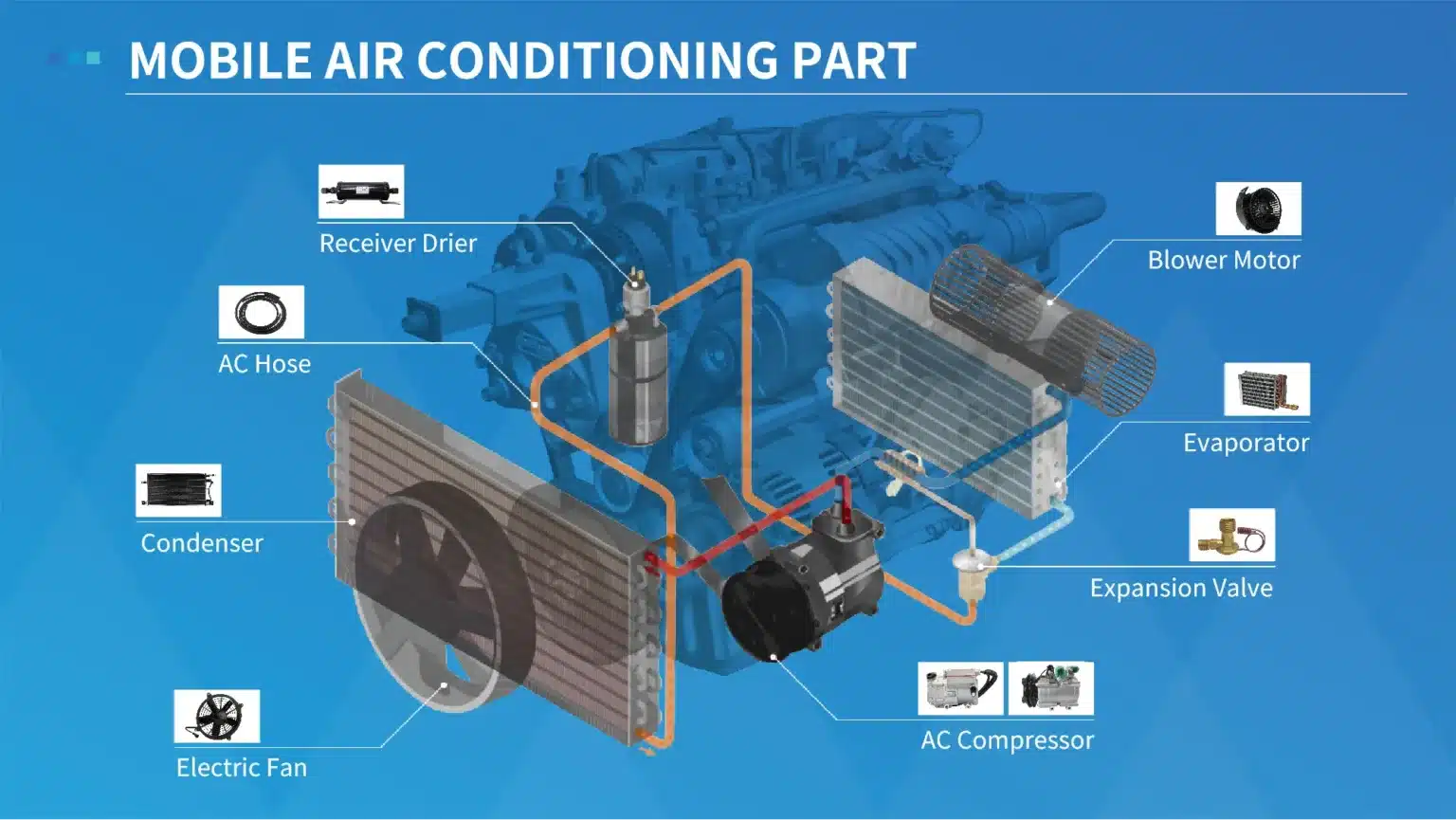
Key Components and Their Contributions
| COMPONENT | ROLE IN TEMPERATURE REGULATION |
| Accumulator / Receiver-Drier | Removes moisture and contaminants from refrigerant, preventing erratic cooling. |
| Expansion Valve / Orifice Tube | Controls refrigerant flow into the evaporator, regulating cooling output. |
| Evaporator | Absorbs heat from cabin air, the core site for cooling. |
| Compressor | Pressurizes and circulates refrigerant; efficiency directly affects vent temperature. |
| Cooling Fans / Blower Motor | Controls airflow through the evaporator; uneven flow causes hot spots. |
| Thermostat / Sensors | Monitor cabin and evaporator temps; regulate compressor operation. |
Even minor malfunctions in these components can lead to higher car AC vent temperature or uneven airflow.
Common Temperature-Related Anomalies
Inconsistent Cooling
-
- Causes: low refrigerant, clogged expansion valve, weak compressor.
-
- Symptom: Some vents feel cold while others are warm.
Uneven Airflow
-
- Causes: blocked ducts, malfunctioning blower motor, dirty cabin filter.
-
- Tip: Inspect and clean ducts and the cabin air filter.
Slow Cooling in Extreme Heat
-
- Causes: high ambient temperature, high humidity, undercharged AC system.
-
- Solution: Use recirculation mode, check refrigerant levels, and maintain the system regularly.
Practical Tips for Optimal AC Performance
-
- Always use recirculation mode for faster cabin cooling.
-
- Conduct regular maintenance: replace the cabin air filter, check the refrigerant, inspect the compressor, and evaporator.
-
- Start with medium fan speed to allow even distribution of cool air.
-
- Monitor all vents for consistency to ensure full cabin comfort.
Conclusion
The car AC vent temperature varies with ambient conditions, humidity, and system efficiency. If you’re wondering what temperature should auto AC should blow, most systems should deliver air within the normal car AC vent temperature range shown in the chart above. Accurate temperature measurement, routine maintenance, and a clear understanding of key air conditioning components play a critical role in achieving consistent and reliable cooling performance. By identifying and addressing even minor issues early—such as temperature fluctuations, airflow inconsistencies, or component wear—vehicle owners can enhance cabin comfort, extend system lifespan, reduce the likelihood of costly repairs, and maintain optimal cooling efficiency across a wide range of driving conditions.