
A piercing noise comes out when AC is turned on can be associated with several components in the belt drive, compressor assembly, or HVAC blower system. For repair shops, distributors, and automotive A/C service professionals, identifying the source of the noise is an important step before selecting replacement components. A similar squealing sound can originate from different parts, including the drive belt, compressor clutch, pulley bearing, compressor, or blower motor.
This guide focuses on three major areas that should be considered when diagnosing A/C-related squealing noises:
- Worn, loose, or slipping drive belt
- A/C compressor, clutch, or pulley problems
- Blower motor problems
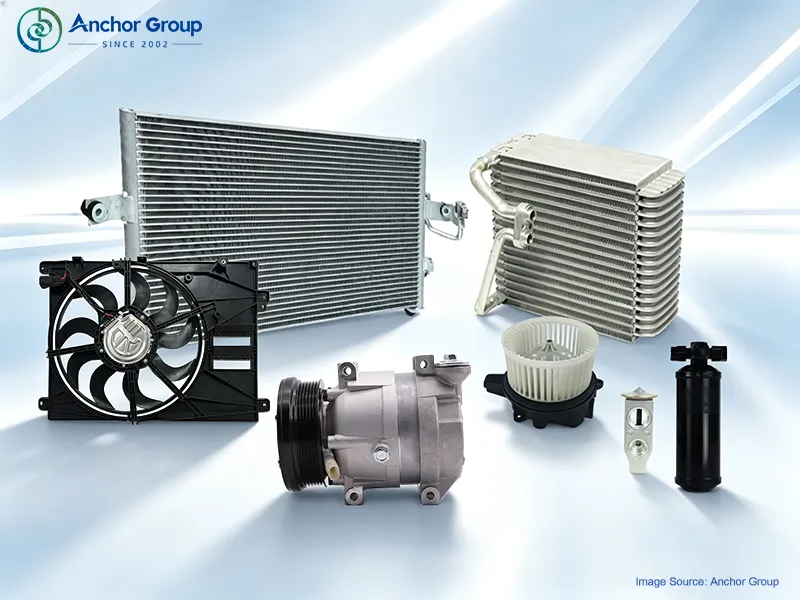
Note: We are Anchor Group, a one-stop automotive A/C parts and systems manufacturer based in Ningbo, China. We provide reliable replacement solutions for repair shops, distributors, and automotive A/C service professionals.
Worn, Loose, or Slipping Drive Belt
The drive belt transfers engine power to the A/C compressor and other engine accessories. When the A/C compressor engages, the additional mechanical load is transferred through the belt drive. If the belt is worn, loose, glazed, misaligned, or contaminated with oil, it may slip against the pulley surface and produce a high-pitched squealing noise.
Common Signs
A belt-related squealing noise may be accompanied by:
- Noise occurring when the A/C compressor engages
- Noise that changes with engine RPM
- Visible cracks, fraying, or glazing on the belt
- Increased noise under higher A/C load
What to Inspect
During inspection, check the drive belt for:
- Cracking or excessive wear
- Frayed edges
- Glazing or a polished surface
- Oil or other contamination
- Incorrect belt tension
- Misalignment with the pulleys
A belt that is significantly worn, damaged, or contaminated may require replacement rather than simple adjustment or cleaning.
A/C Compressor, Clutch, or Pulley Problems
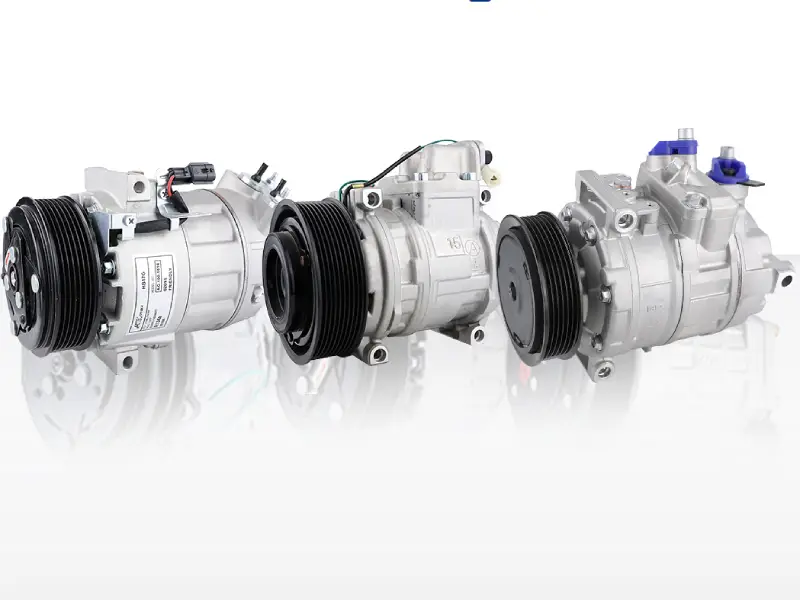
The A/C compressor assembly contains several components that can contribute to abnormal noise, including the compressor, electromagnetic clutch, pulley, and pulley bearing.
Correct identification of the failed component is important because a squealing noise does not necessarily indicate compressor failure.
A/C Compressor Problems
The compressor normally creates mechanical resistance while operating. However, excessive internal resistance can develop due to inadequate lubrication, internal wear, contamination, bearing damage, or other mechanical problems. An abnormally high compressor load can increase the load on the belt and clutch, potentially resulting in belt or clutch slippage and a squealing noise. In severe cases, mechanical damage may eventually lead to compressor seizure.
A/C Clutch Problems
The electromagnetic clutch controls the transfer of engine power from the pulley to the compressor shaft when the A/C system is operating. Possible clutch-related problems include:
- Excessive air gap
- Worn or contaminated friction surfaces
- Insufficient electrical power
- Abnormal clutch engagement
- Clutch slippage
When the clutch does not transfer power correctly, relative movement between the friction surfaces can generate heat and abnormal squealing noise.
Pulley and Pulley Bearing Problems
The compressor pulley is driven by the engine’s belt, while the pulley bearing allows the pulley to rotate smoothly. A worn or damaged pulley bearing may produce:
- Squealing
- Whining
- Grinding
- Rattling
- Rough or uneven rotation
Abnormal pulley movement or wobbling may also indicate a bearing or pulley problem. An important diagnostic point is that the compressor pulley can continue rotating with the engine even when the A/C is switched off. Therefore, noise that remains with the A/C disengaged may indicate a pulley or pulley bearing issue rather than a compressor operating problem.
What to Inspect
For compressor-related noise, technicians should inspect:
- Compressor pulley
- Pulley bearing
- Clutch engagement
- Clutch friction surfaces
- Clutch air gap
- Electrical supply to the clutch
- Compressor rotational resistance
- Drive belt condition and alignment
Replacing the complete compressor assembly should not be the first assumption based solely on a squealing noise. Component-level diagnosis can help identify the actual source of the problem.
Blower Motor or Blower Wheel Problems
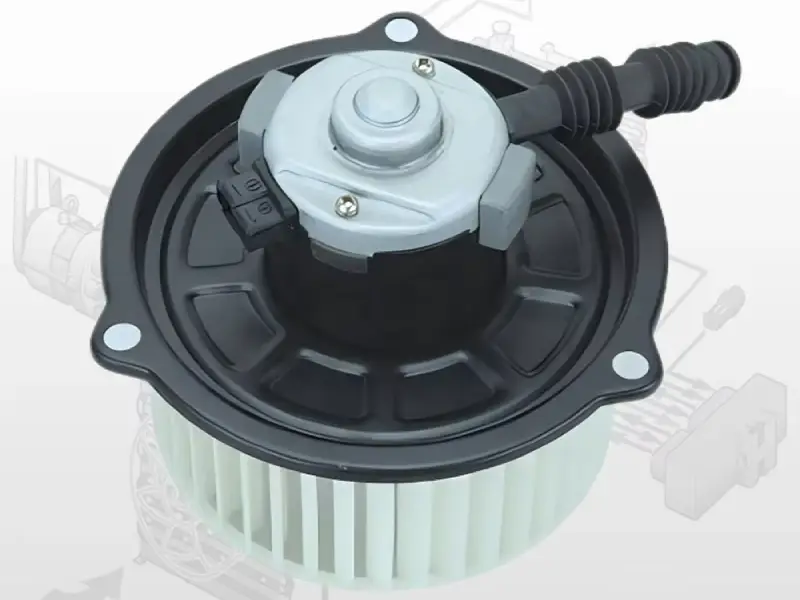
Not all A/C-related noises originate in the engine compartment. The blower motor is part of the vehicle’s HVAC system and drives the blower wheel to circulate air through the cabin. Wear or damage to the blower motor bearing, shaft, or blower wheel can result in squealing, squeaking, rubbing, buzzing, or rattling noises. Foreign objects such as leaves, dirt, or other debris entering the HVAC air intake can also interfere with blower wheel rotation.
Common Signs
Blower-related noise typically has several distinguishing characteristics:
- Noise originates from inside the vehicle cabin
- Noise changes with blower speed
- Noise becomes more noticeable at higher fan speeds
- Noise may occur independently of compressor engagement
- Rubbing, squeaking, buzzing, or rattling may be present
If the noise changes directly with the blower speed, the blower motor or blower wheel should be considered during diagnosis.
What to Inspect
Inspection should include:
- Blower motor
- Motor bearing or bushing
- Blower wheel
- Motor shaft
- Foreign objects or debris
- Signs of rubbing or imbalance
Depending on the condition of the component, repair or replacement of the blower motor or related parts may be required.
Recommended Inspection Before Parts Replacement
Before replacing an A/C component, it is useful to establish whether the noise is associated with the belt drive, compressor assembly, or HVAC blower system.
A basic inspection can include:
- Identify the location of the noise.
- Check whether the noise occurs with the A/C engaged or disengaged.
- Observe whether the noise changes with engine RPM.
- Check whether the noise changes with blower speed.
- Inspect the drive belt and pulley alignment.
- Check the compressor clutch engagement.
- Inspect the pulley and pulley bearing for abnormal movement or noise.
- Check compressor rotational resistance where appropriate.
- Inspect the blower motor and blower wheel for wear, rubbing, or foreign objects.
Accurate diagnosis helps reduce unnecessary replacement and improves parts selection for repair applications.
Preventive Inspection and Maintenance
Regular inspection of A/C-related components can help identify wear before it develops into a larger system problem.
For workshops and fleet maintenance operations, inspection may include:
- Drive belt condition and tension
- Compressor clutch operation
- Pulley and pulley bearing condition
- Compressor operating condition
- Blower motor condition
- Blower wheel condition
- HVAC air intake and debris contamination
Early identification of worn components can help reduce secondary damage and unnecessary downtime.
When Professional Inspection Is Recommended
Further inspection is recommended when an A/C system develops:
- Persistent or increasingly loud squealing
- Abnormal compressor engagement
- Significant belt damage
- Pulley wobbling or grinding
- Excessive compressor resistance
- Burning odor
- Abnormal vibration
- Reduced cooling performance
For repair facilities and service professionals, isolating the source of the noise before parts replacement is essential to selecting the appropriate replacement component.
Conclusion
A squealing noise associated with a vehicle A/C system can originate from different parts of the system. Common areas for inspection include the drive belt, A/C compressor, electromagnetic clutch, compressor pulley, pulley bearing, blower motor, and blower wheel. Rather than treating every squealing noise as a compressor failure, the noise should be evaluated according to its location, operating conditions, and relationship to engine RPM, A/C engagement, and blower speed.
For automotive A/C parts distributors, repair shops, and service professionals, accurate component identification helps support more efficient diagnosis, parts selection, and replacement.