
What Is an Electric Car AC System?
An electric car AC system is an air conditioning system powered by electricity instead of an engine-driven belt. It is widely used in electric passenger vehicles, electric buses, commercial vehicles, and parking air conditioning systems.
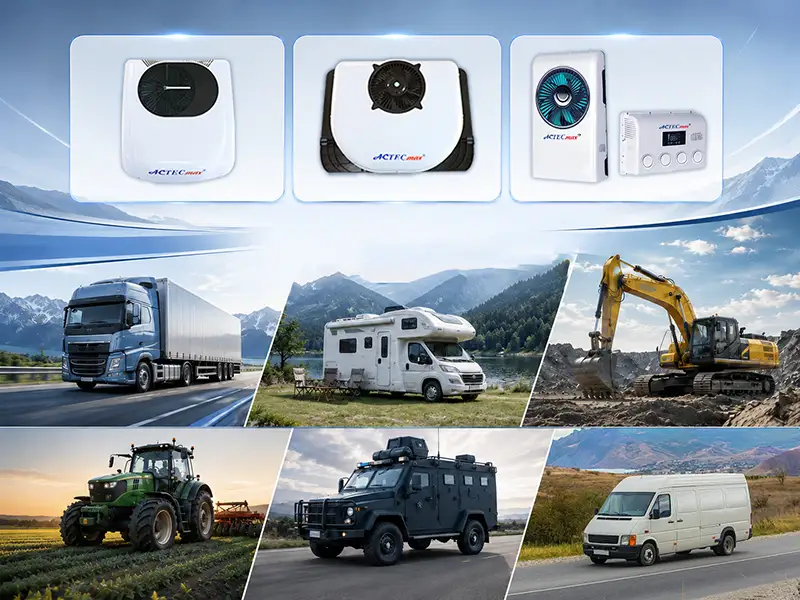
A parking air conditioner is one of the most common applications of an electric AC for car. It is an independent cooling system powered by the vehicle’s battery and driven by an electric compressor. Unlike a traditional vehicle air conditioner, it can continue operating even after the engine has been turned off. Parking air conditioners are mainly used in trucks, RVs, construction machinery, agricultural equipment, and other commercial vehicles, providing drivers with a comfortable cabin environment during rest periods while significantly reducing fuel consumption.
Also Read: The detailed introduction of the Parking Air Conditioner
Main Components of a Parking Air Conditioner
A parking air conditioner consists of several key components that work together to provide efficient cooling performance, the same as a traditional air conditioning system. The main parts include:
- Electric AC compressor
- Electronic controller
- Condenser
- Evaporator
- Expansion valve
- Condenser fan
- Evaporator blower
- Wiring harness and power cables
These components form a complete refrigeration system. The compressor circulates refrigerant throughout the system, the condenser releases heat, the evaporator absorbs cabin heat, while the controller manages the operating status of the entire system. Selecting high-quality components is essential for achieving reliable cooling performance and long service life.
Also Read: Car AC System Diagram: Complete Breakdown of Components, Functions & B2B Sourcing Guide
Comparison Between Traditional Car AC and Parking AC
| Comparison Item | Traditional Vehicle AC | Parking Air Conditioner |
| Power Source | Engine belt-driven compressor | Battery-powered electric compressor |
| Operating Condition | Only when the engine is running | Works both when the engine is running and when it is turned off |
| Fuel Consumption | High idling fuel consumption (approximately 2–3 L/hour) | No fuel consumption, only electricity |
| Noise Level | Engine noise is significant | Electric compressor operates much more quietly |
| Environmental Impact | Produces exhaust emissions | Zero emissions during operation |
| Installation | Factory-installed | Can be retrofitted (roof-mounted or split type) |
Compared with conventional vehicle air conditioning systems, parking air conditioners provide significant advantages in fuel savings, environmental protection, driver comfort, and installation flexibility. They have become increasingly popular among truck fleets, logistics companies, RV manufacturers, and commercial vehicle operators worldwide.
Key Components and Wholesale Purchase Guidance to Buy an Electric AC for Car
Choosing the right components is one of the most important factors when purchasing parking air conditioners in bulk. Different component configurations directly affect cooling performance, durability, operating costs, and customer satisfaction.
Compressor Selection
The compressor is the heart of every parking air conditioner. Currently, three major types of electric compressors are commonly used:
- Scroll compressors
- Twin rotary compressors
- Single rotary compressors
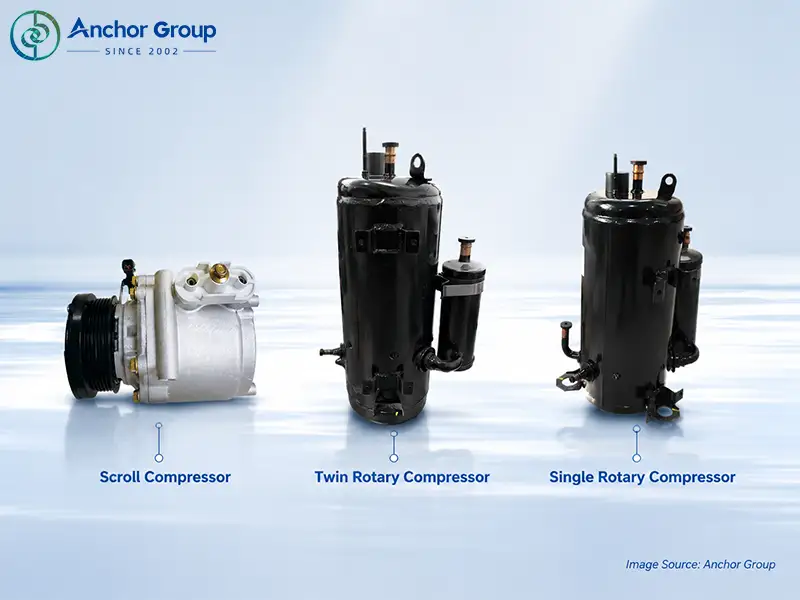
Scroll compressors are lightweight and operate with very low noise levels, making them suitable for applications where comfort is a priority.
Twin rotary compressors offer excellent operating consistency, lower current consumption, and a much longer service life. They are widely recognized as one of the most reliable options for commercial vehicle parking air conditioners.
Single rotary compressors are generally more economical but produce higher vibration and noise and usually have a shorter service life.
For wholesale buyers, compressor selection should be based on target market positioning. Premium products generally benefit from scroll or twin rotary compressors, while single rotary compressors may be suitable for entry-level markets where cost is the primary concern.
Also Read:Complete Guide to Auto AC Compressors We Offer
Condenser Selection
Parking air conditioners mainly use two types of condensers:
- Parallel flow condenser
- Copper tube and fin condenser (expanded tube type)
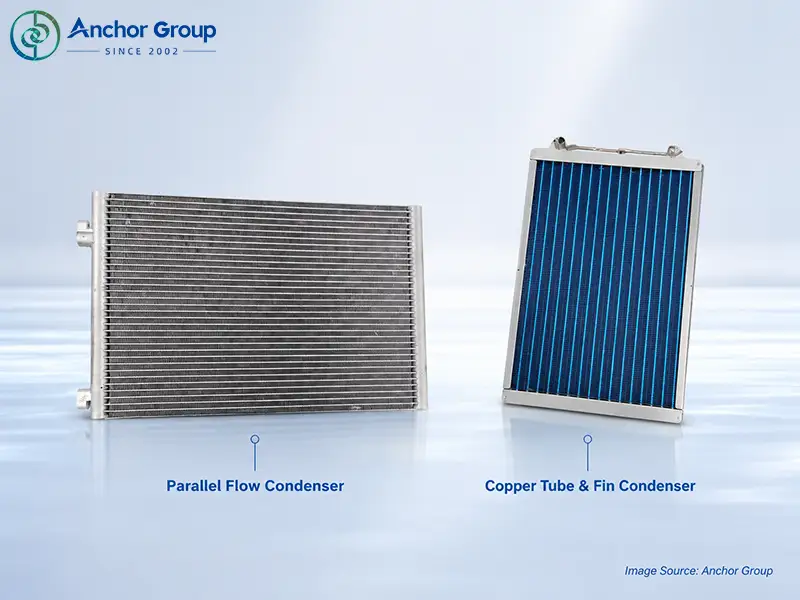
Parallel flow condensers offer higher heat exchange efficiency, lighter weight, and lower manufacturing costs. They are widely used in highway trucks, long-distance transportation, and lightweight vehicle applications.
Copper tube condensers provide superior anti-clogging capability and excellent corrosion resistance. Although they are more expensive, they perform exceptionally well in harsh environments such as agricultural machinery, mining equipment, and construction vehicles.
For large-volume procurement, businesses seeking better cost performance should consider systems equipped with parallel flow condensers. For agricultural machinery, engineering equipment, or vehicles operating in dusty environments, copper tube condensers are usually the better long-term investment.
Also Read: What is a Condenser in a Car?
Evaporator Selection
Parking air conditioners generally use four types of evaporators:
- Aluminum tube evaporator
- Copper tube evaporator
- Parallel flow evaporator
- Louvered parallel flow evaporator
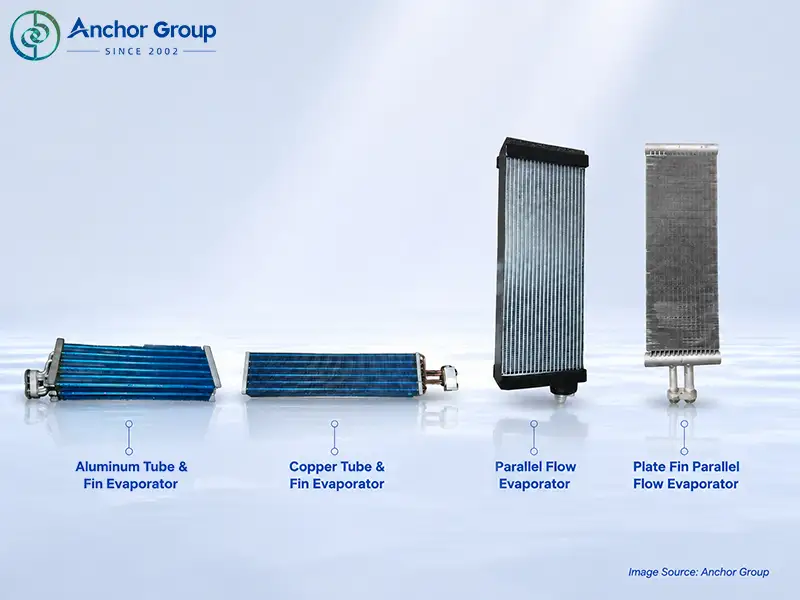
Aluminum tube evaporators are relatively inexpensive and suitable for cost-sensitive applications. However, their durability is relatively limited.
Copper tube evaporators provide outstanding corrosion resistance and long-term reliability, making them ideal for agricultural machinery and heavy-duty construction equipment operating under demanding conditions. Their higher performance comes with higher purchasing costs.
Parallel flow evaporators feature excellent heat transfer efficiency and lightweight construction, offering an attractive balance between performance and cost.
Louvered parallel flow evaporators further improve drainage capability while increasing heat exchange efficiency compared with standard parallel flow designs. They are increasingly used in new energy vehicles and high-performance electric air conditioning systems.
When purchasing electric AC systems in bulk, evaporator selection should match the intended application. Standard trucks and RV parking air conditioners generally achieve the best balance of performance and cost with parallel flow or aluminum tube evaporators. Agricultural machinery and construction equipment benefit from copper tube evaporators because of their superior durability. For electric vehicles and projects requiring maximum cooling efficiency and compact installation space, louvered parallel flow evaporators are often the preferred solution.
Fan and Blower Motor Selection
The condenser fan and evaporator blower are typically driven by either brushed motors or brushless DC (BLDC) motors. The differences between the two technologies are significant.
| Comparison | Brushed Motor | Brushless DC (BLDC) Motor |
| Technology | Mechanical commutation with carbon brushes | Electronic commutation with controller and Hall sensors |
| Service Life | Approximately 5,000–8,000 hours | More than 30,000 hours |
| Noise | 45–55 dB | 40–50 dB |
| Energy Efficiency | 75%–80% | 85%–90% |
| Initial Cost | Lower | Higher |
Because brushed motors rely on physical contact between carbon brushes and the commutator, wear is unavoidable, resulting in shorter service life, higher maintenance requirements, and increased operating noise.
BLDC motors eliminate mechanical friction through electronic commutation, offering substantially longer service life, quieter operation, and significantly higher energy efficiency. Since parking air conditioners often operate for extended periods while powered only by the vehicle battery, higher efficiency can increase battery endurance by approximately 15% to 30%.
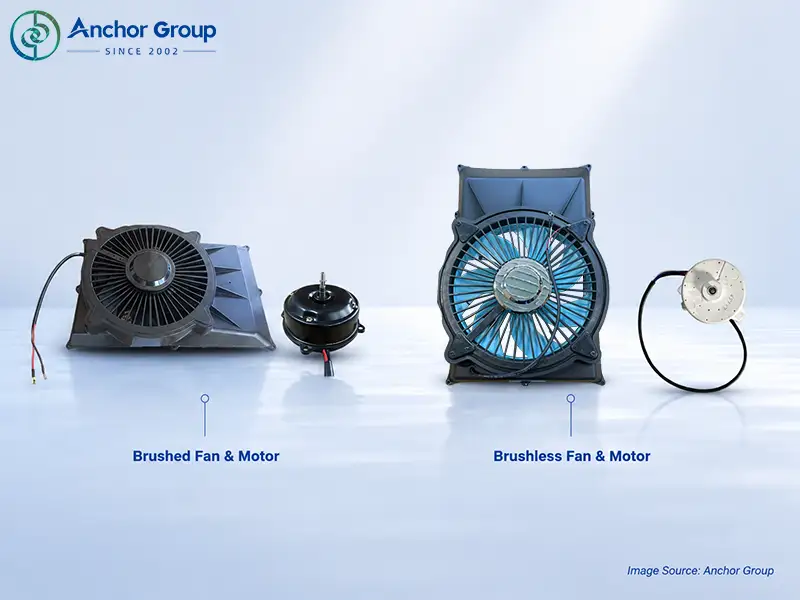
For most B2B buyers, brushless (BLDC) parking air conditioners are the recommended choice. Although brushed motor systems remain suitable for price-sensitive markets, the growing demand for energy efficiency, low noise, and long service life in commercial vehicles, logistics fleets, construction machinery, and RV applications has made BLDC technology the industry standard.
Choosing the Right Supplier Is Even More Important
Selecting the right parking air conditioner configuration is only part of a successful procurement strategy. Choosing a reliable supplier is equally important.
A professional manufacturer should not only provide stable product quality but also offer strong engineering support, consistent production capacity, and comprehensive after-sales service. When evaluating suppliers, B2B buyers should pay attention to factors such as manufacturing experience, quality management systems, production capabilities, product certifications, OEM and ODM support, technical assistance, warranty policies, and delivery reliability.
An experienced supplier can also recommend the most suitable compressor, condenser, evaporator, and motor configuration based on your target market and application scenario, helping distributors and importers reduce warranty claims while improving customer satisfaction and long-term profitability.
For wholesalers, distributors, fleet operators, and vehicle manufacturers, partnering with an experienced parking air conditioner manufacturer is often the most effective way to ensure stable product quality, competitive pricing, and sustainable business growth.
Note:
Founded in 2002, Anchor Group is a one-stop automotive AC system and components supplier serving customers in 160+ countries and regions. With stable manufacturing capability, OEM & ODM services, customized solutions, and technical support, we help global distributors, wholesalers, and vehicle manufacturers source reliable AC solutions.
FAQ
Q1: Is there an electric air conditioner for cars?
Yes. Electric air conditioners are widely used in EVs, trucks, RVs, buses, and other commercial vehicles. They use a battery-powered electric compressor and can provide cooling even when the engine is off.
Q2: Do you make electric AC for cars?
Yes. We manufacture parking air conditioners for trucks, RVs, construction equipment, agricultural machinery, and other commercial vehicles. Besides, we also make electric air conditioners for buses. OEM and ODM services are also available for wholesale customers.
Q4: Is electric AC better?
In many cases, yes. Electric AC systems are quieter, more energy-efficient, and can keep cooling when the engine is off, making them ideal for commercial vehicles and long-distance transportation.