
A bus air conditioning system — whether on a diesel, gas, or hybrid bus — works on the same basic principle as a car AC system, just scaled up to handle a much larger cabin space and often mounted differently. Here’s how it works:
Basic Refrigeration Cycle of Bus Air Conditioning System
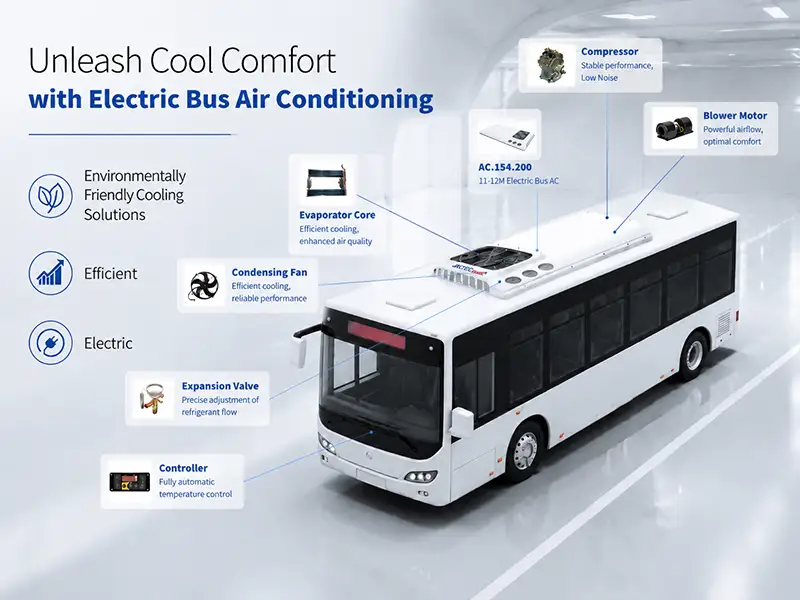
- Compression – The compressor (usually mounted on or driven by the engine) compresses low-pressure refrigerant gas into a high-pressure, high-temperature gas.
- Condensation – This hot gas flows to the condenser, typically mounted on the roof or rear of the bus, where outside air blown across the coils removes heat, turning the refrigerant into a high-pressure liquid.
- Expansion – The liquid refrigerant passes through an expansion valve (or orifice tube), which causes a sudden pressure drop, cooling it significantly.
- Evaporation – The cold, low-pressure refrigerant flows through the evaporator coil(s), often located in the ceiling or side panels of the bus. Blower fans push warm cabin air across these coils, and the refrigerant absorbs the heat, cooling and dehumidifying the air before circulating it back into the cabin.
- The refrigerant, now a warmed low-pressure gas, returns to the compressor, and the cycle repeats.
How the Compressor Is Powered
This is the main difference between bus types:
- Engine-driven compressor: In most diesel/gas buses, the compressor is driven by a belt connected to the engine (similar to a car), meaning the engine typically needs to be running for AC to work efficiently.
- Hybrid buses: May use a mix — sometimes an electric compressor is added to allow AC to run during engine idle-stop periods to save fuel.
Key System Layout
- Rooftop AC unit: Common in city and coach buses — a self-contained package combining the condenser, evaporator, blower, and controls, mounted on the roof to save interior space and improve airflow distribution.
- Ducting system: Distributes cooled air through overhead ducts running the length of the bus, often with adjustable vents for passengers.
- Multiple evaporator zones: Larger buses often have multiple evaporator units placed at intervals along the roof or sides to ensure even cooling throughout the cabin, since a single unit wouldn’t distribute air adequately in a long vehicle.
- Control panel: Drivers or a central control system can usually manage temperature settings, fan speed, and sometimes zone-specific climate control (front vs. rear of bus).
Also Read : Bus AC System
Additional Considerations for Buses
- High cooling capacity: Bus Air conditioning system must handle much larger volumes of air and heat loads (due to more passengers, larger glass area, and frequent door openings) than typical car AC systems, so they use bigger compressors and multiple evaporator/condenser units.
- Heating: Many buses use engine coolant heat (via a heater core) for cabin heating in cold weather, separate from the AC refrigerant loop — unlike electric buses, which often need heat pumps or electric heaters since there’s no engine heat available.
- Idle considerations: Because engine-driven compressors need the engine running, some transit agencies configure buses to idle during layovers just to keep AC running, which raises fuel consumption and emissions — a factor that’s pushed some fleets toward hybrid or electric AC solutions.
Would you like a comparison between a diesel bus air conditioning system and an electric bus AC system, or more detail on a specific part like rooftop units or heating systems?
What Anchor Group Brings to You
Anchor Group specializes in the design and manufacturing of international-standard bus air conditioning system, covering engine-driven buses, electric buses, and double-decker buses — with solutions for vehicles ranging from 5 to 14 meters in length and cooling capacities from 8 to 48 kW.
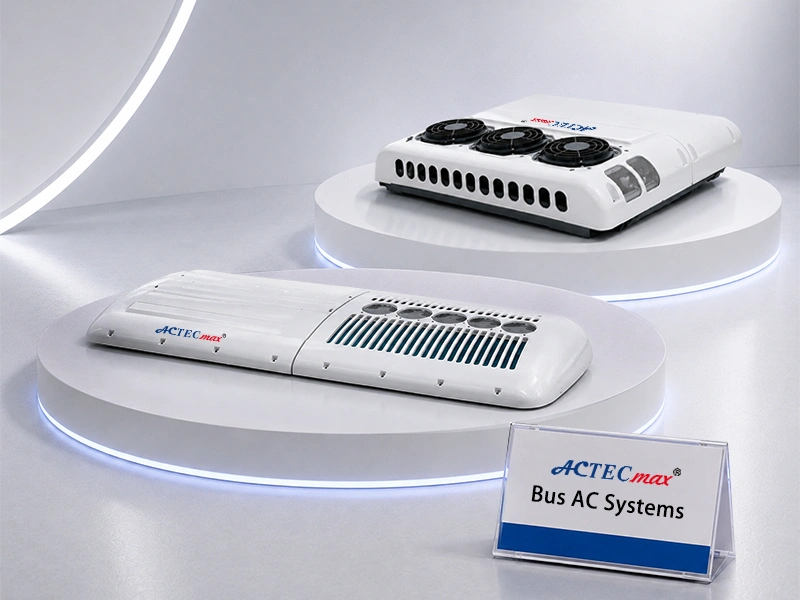
At Anchor Group, we offer a one-stop solution: from customized products and OEM/ODM manufacturing to localized design, packaging, and branding, backed by professional technical support and guidance every step of the way.
We believe that our customers’ success is our success. Whether you’re a vehicle manufacturer, distributor, or regional partner, Anchor Group is committed to being your trusted long-term partner. Join us — let’s build something great together.