
What Is a Transport Refrigeration Unit?
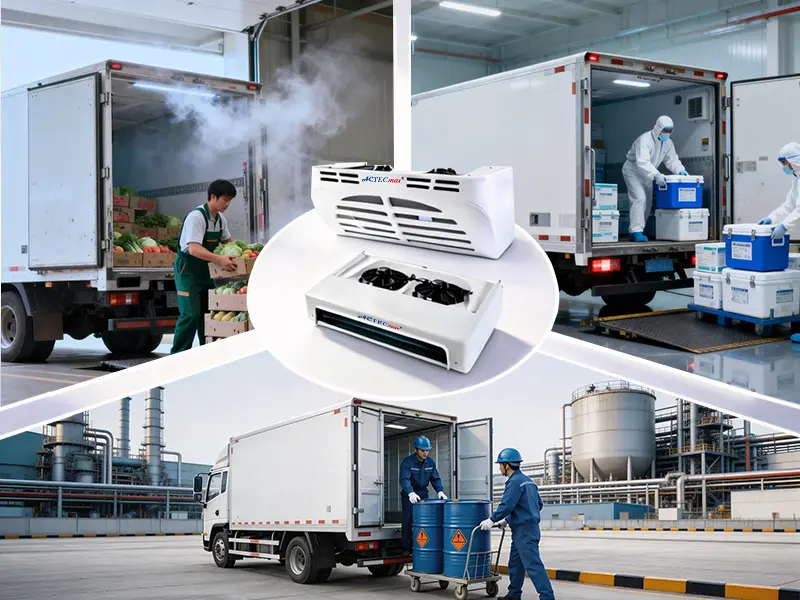
A Transport Refrigeration Unit (TRU) is a temperature control system installed on vehicles to keep cargo within a set temperature range during transit. TRUs are now essential across food, beverage, pharmaceutical, chemical, and electronics logistics — anywhere product integrity depends on maintaining a stable cold chain from origin to destination.
For procurement teams, the real question isn’t just “what is a TRU” — it’s which TRU configuration actually fits your fleet, cargo, and budget. This guide walks through the decision points that matter most before you request a quote.
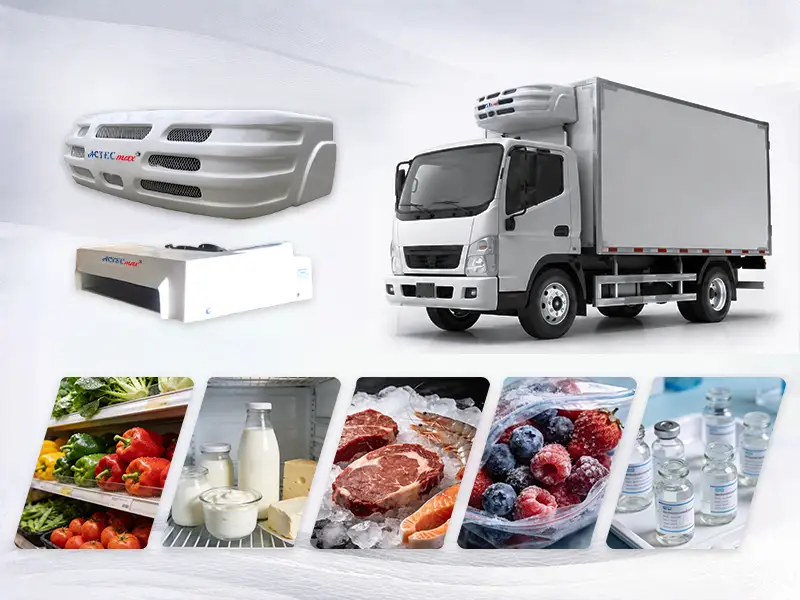
Integrated vs. Split Units: Quick Comparison
| Integrated Unit | Split Unit | |
|---|---|---|
| Structure | All components (compressor, condenser, evaporator) in one housing | Condenser and evaporator installed separately |
| Best for | Small to mid-size refrigerated vans | Medium and large refrigerated trucks/trailers |
| Installation | Simple — mount, connect power, commission | Complex — requires refrigerant piping and cabling between units, experienced technicians |
| Cooling capacity | Lower to moderate | Higher, more uniform distribution |
| Maintenance | Easier, lower cost | More involved, higher skill requirement |
| Typical cost | Lower upfront cost | Higher upfront cost |
Rule of thumb: if you’re running last-mile delivery vans or small refrigerated trucks, an integrated unit usually covers your needs at a lower total cost. If you’re moving cargo over long distances in medium- or large-capacity trucks, the extra investment in a split system typically pays off through better temperature uniformity and cooling headroom.
Five Factors That Actually Determine Your Choice
Match Cooling Capacity to Cargo Volume — Not Vehicle Size
The required cooling capacity of a transport refrigeration unit depends on several factors, including cargo volume, insulation performance, ambient temperature, and required cargo temperature. As a general guideline:
| Vehicle Type | Cargo Volume | Typical Cooling Capacity |
|---|---|---|
| Small refrigerated vans | Up to 15 m³ | 2,000–4,000 kcal/h (approximately 8,000–16,000 BTU/h) |
| Medium-duty refrigerated trucks | 15–30 m³ | 4,000–7,000 kcal/h (approximately 16,000–28,000 BTU/h) |
| Large trucks and trailers | 30+ m³ | 7,000+ kcal/h (28,000+ BTU/h), depending on cargo requirements and operating conditions |
However, vehicle size alone should not determine refrigeration capacity. Businesses transporting frozen products, pharmaceuticals, or goods requiring strict temperature control may require higher-capacity systems even with smaller cargo spaces.
Choose the Power Source Based on Your Route Profile
- Electric-powered units (running off vehicle batteries, standalone battery packs, or external power) are quieter, lower-maintenance, and produce zero direct emissions — well suited to urban delivery, electric vans, and short- to medium-distance routes where overnight charging or shore power is available.
- Fuel-powered units (typically diesel-driven) deliver stronger, more sustained cooling capacity for long operating hours — the standard choice for heavy-duty trucks and long-haul trailers where continuous, high-capacity cooling matters more than fuel cost or noise.
If your fleet mixes both use cases — say, urban depots feeding long-haul routes — it’s worth evaluating power source per vehicle type rather than standardizing on one across the whole fleet.
Installation Configuration Should Match Vehicle Design and Access Needs
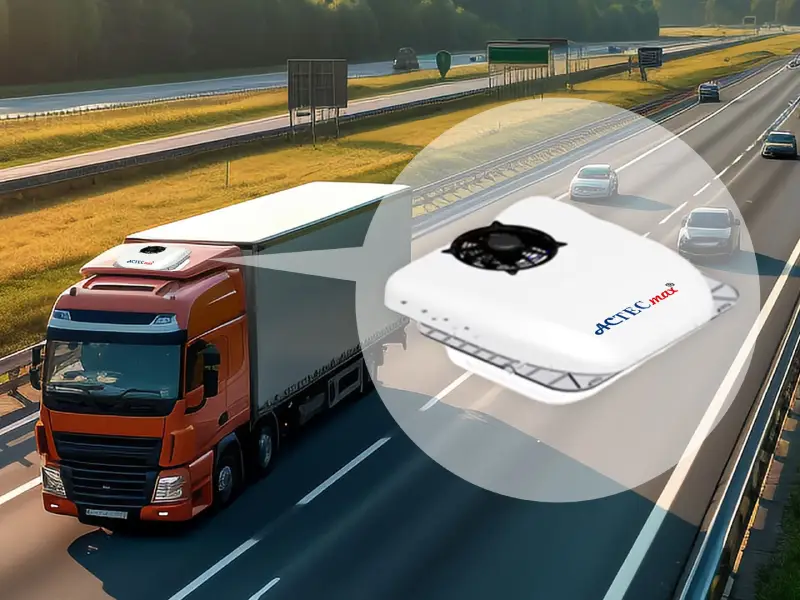
- Roof-mounted units suit vans and light commercial vehicles with limited space, keeping the cargo area clear.
- Front-mounted units are more common on medium and large trucks, offering higher cooling capacity and easier access for maintenance.
Beyond space constraints, consider how installation affects service turnaround: front-mounted units on large trucks are generally quicker for technicians to access, which matters if your fleet can’t afford extended downtime during repairs.
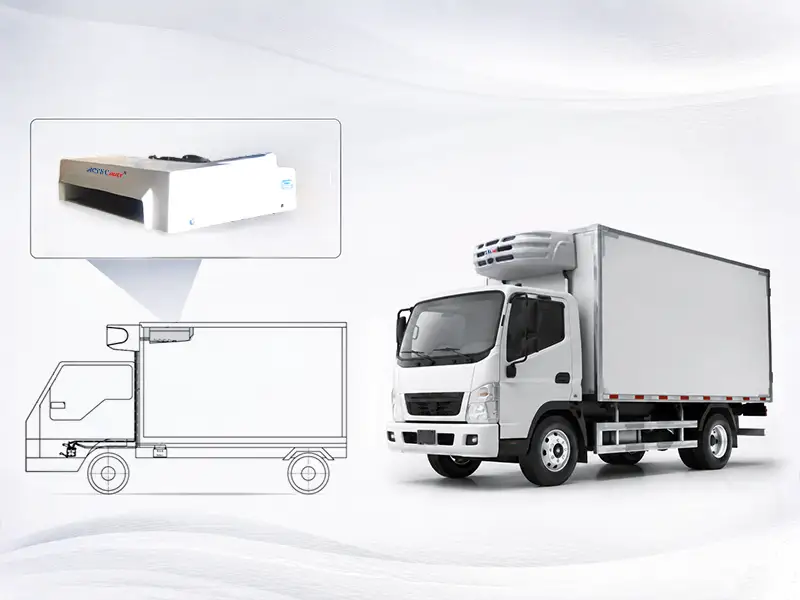
Note: For split transport refrigeration systems, the condenser assembly is typically mounted at the front of the vehicle.
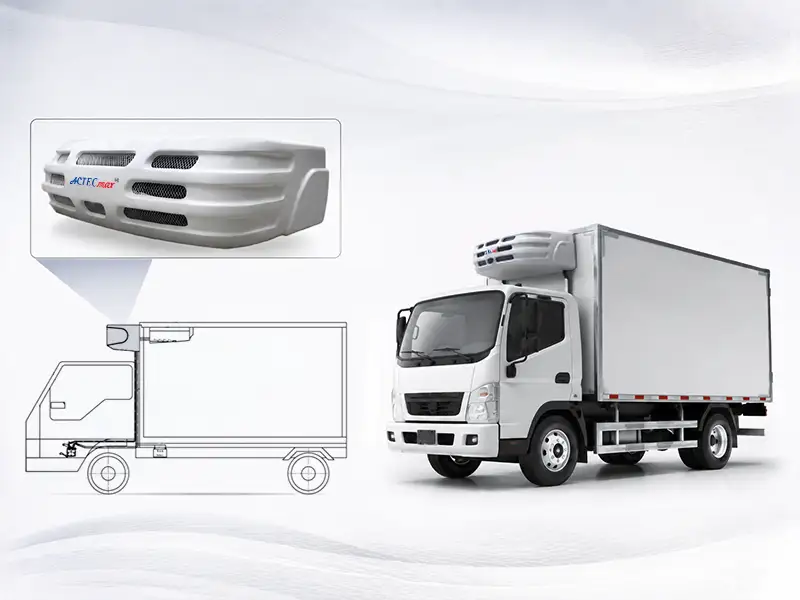
while the evaporator assembly is installed inside the refrigerated cargo compartment. This configuration allows efficient heat dissipation outside the vehicle while ensuring even cold air distribution throughout the cargo space.
Calculate Total Cost of Ownership, Not Just Purchase Price
Purchase price is only one line item. Before comparing quotes, ask suppliers for data on:
- Energy or fuel consumption under typical operating conditions
- Expected maintenance intervals and average part-replacement costs
- Component lifespan, particularly compressor life
- Warranty coverage — what’s included, what’s excluded, and for how long
A lower-priced unit with weak efficiency or a short compressor lifespan often costs more within two to three years of operation than a higher-priced, better-engineered alternative.
Confirm Supplier Service Support Before You Commit
For fleet operators, a refrigeration failure mid-route isn’t a minor inconvenience — it’s spoiled cargo and a missed delivery window. Before finalizing a supplier, verify:
- Regional service network coverage and average response time
- Spare parts availability and typical lead time
- Technical support during commissioning and troubleshooting
- References from businesses running similar vehicle types and routes
Note: Choosing an experienced supplier can simplify system selection and ensure reliable after-sales support. At Anchor Group, we offer a complete range of transport refrigeration units and components to help businesses build efficient and dependable cold chain solutions.
Matching TRU Type to Common Business Scenarios
| Business Type | Typical Recommendation |
|---|---|
| Urban grocery/e-commerce delivery | Integrated, electric-powered, roof-mounted — compact, quiet, low-maintenance for frequent stops |
| Regional food distribution (medium trucks) | Integrated or split depending on truck size, fuel-powered for consistent multi-hour routes |
| Long-haul frozen/pharma transport | Split unit, fuel-powered, front-mounted — maximum cooling capacity and uniform temperature over long distances |
| Mixed urban + long-haul fleets | Evaluate power source and unit type per vehicle segment rather than a single fleet-wide standard |
Before You Request a Quote: Checklist
- What’s the exact volume and insulation spec of your cargo compartment?
- What temperature range and tolerance does your cargo require?
- How many door-open cycles occur per route on average?
- Is your fleet (or specific vehicles) electric, hybrid, or diesel?
- What’s your expected duty cycle — hours of continuous operation per trip?
- What service network does the supplier have in your operating region?
Conclusion
Choosing the right transport refrigeration unit comes down to matching cooling capacity to actual cargo volume, selecting a power source suited to your route profile, and evaluating total cost of ownership rather than purchase price alone. Just as important — and often overlooked — is confirming the supplier can back the equipment with reliable regional service, since downtime in cold chain transport translates directly into product loss.
Before requesting quotes, use the checklist above to define your requirements clearly. A supplier that asks detailed questions about your cargo, routes, and duty cycle — rather than pushing a standard unit — is generally the one better equipped to get your sizing and configuration right the first time.